It’s been a while since I last wrote on my blog, but today feels special—today, November 5th, is Virat Kohli’s birthday. Reflecting on his journey feels almost like walking through the timeline of my own childhood memories, shaped by so many moments that he’s given us as cricket fans.
I still remember the heartbreak of the 2007 ODI World Cup. For cricket fans in India, it was a painful chapter. But then, only a few months later, I saw a chubby young guy with spiky, gelled hair playing on Neo Sports, and there was something about him that was magnetic. The aggression, the hunger to succeed—Virat Kohli was different. Just a year later, after making a name for himself with stunning performances in the Ranji Trophy and as the captain of the Under-19 World Cup-winning team, he made his debut for India. That was the beginning of a new chapter in Indian cricket.
Virat Kohli wasn’t just another player; he redefined what it meant to wear the Indian jersey. He embodied a new spirit of aggression, a fierce determination to win, especially in overseas conditions. With him, the Indian team didn’t just play; they dominated. His transformation as a cricketer mirrored the journey of a generation that grew up watching him evolve, and with every match, we found new reasons to admire his dedication and passion.
There are so many unforgettable moments: the back-to-back Man of the Series titles in consecutive T20 World Cups, his unforgettable innings at Melbourne and Adelaide, and his match-winning performances in the Champions Trophy. In 2016, he was practically unstoppable, setting records with such ease that it felt like he was playing on another level.
And just when critics began to question his future, he silenced them all with yet another comeback, earning Man of the Series at the ODI World Cup and reminding us why he’s one of the greatest of all time. Today, he’s not only a global cricket icon with the most Instagram followers in India but also someone whose dedication and hard work have inspired millions.
Happy birthday to the King—Virat Kohli. Here’s to wishing him an incredible journey ahead, both on and off the field. Long live the King!
For over seventy years the middle east has been subjected to a whole host of geo political tensions. As the heart of which is Israel Palestine conflict. This is the main cause to the blood shed geo political environment in Western Asia. Since from the last week the subject is back to news columns with more intensity and fire power.We are also discussing this ‘ burning topic ‘ each other, some of us are standing with Palestine and others are arguing for Israel. Actually the real problem is some pseudo secularist and extremists propagating xenophobic messages in social media platforms about this issues for their personal gains. The most unfortunate thing about this issue is even the peoples in us are also confronting this issue with their religious faith. They’re fighting and blaming each other in public forums. If it’s been growing like this for prolong then that will lead to a communal polarisation in our society. What happened to our so-called secularist fabric?
“MOTHER AND MOTHER LAND IS MORE BEAUTIFUL THAN HEAVEN”
My Bathinda, The city that’s very close to everyone heart in Punjab. The City that carry the enormous heritage and history of the Punjab, The city give birth to plenty of national icons. The name of the city is very emotional thing for everybody being in here. Every one heart definitely aches when they thing about their home land. For them it’s not a city, it’s more beautiful than heaven.
I’m also write this from a melodious plot of Bathinda. The verdours gloom and wind give charm to the cosy sky of the my heaven. Definitely in future Bathinda will be known as an ‘educational city’ in Punjab because Bathinda is the home of Central university of Punjab and All India institute of medical sciences.
AIIMS BATHINDA
Bathinda is a city and a municipal corporation in the south-western part of Punjab, India. It is the current administrative headquarters of Bathinda district, one of the oldest cities in Punjab, India. It is the fifth largest city in Punjab, located in north-western India in the Malwa region, 227 km west of the capital city Chandigarh. Bathinda is also known as the ‘City of Lakes’ due to its artificial lakes. The first empress Delhi Sultanate Razia Sultan was imprisoned in the Qila Mubarak fort in Bathinda. Bathinda is home to two modern thermal power plants, Guru Nanak Dev Thermal Plant and Guru Hargobind Thermal Plant at Lehra Mohabbat.The city has a fertilizer plant, two cement plants (Ambuja Cements and UltraTech Cement Limited), a large army cantonment, an air force station, a zoo.Bhatinda city is governed by Municipal Corporation Bhatinda. The administrative wing is headed by Municipal Commissioner Bikramjit Singh Shergill while the elected wing is headed by Mayor.
The have great tradition and history to tell to the outsiders. Bhatinda was changed to Bathinda according to the phonetic usage as it is pronounced locally. According to Henry George Rawerti, Bathinda was known as Tabarihind (Lab-ut-Twariq). The first mention of Tabarind is in the Jami-ul-Hakayat, written in 607 AH or 1211 AD.
In 1004, Mahmud of Ghazni besieged a local fort on the route from the northwest to the rich Gangetic valley.In 1189, Muhammad Ghori attacked and captured the fort of Bathinda. The fort was captured by Prithviraj Chauhan, the ruler of the region, thirteen months later, in 1191, after the First Battle of Tharain. In 1634, the Battle of Lahira (at Lahira in Bathinda) was fought between Guru Hargobind and the Mughals.The city was conquered by Maharaja Ala Singh, the Maharaja of Pattiyala in 1754, after which it continued the history of the old Patiala princely state. With the rise of independence, Bathinda became a complete district with the merger of Patiala and the eastern states of Punjab into the Pepsu division.
The climate of Bathinda is semi-arid with high variation in summer and winter temperatures. The average annual rainfall is relatively low, ranging from 20 mm to 40 mm. Recently, summer temperatures of 49 ° C (120 ° F) [12] and winter temperatures of 1 C (approximately 33 ° F) [13] were unknown in Bathinda, with a minimum of -1.4 (C (29.48 ° F)) in the winter of 2013.
As per provisional reports of Census India, population of Bathinda city in 2011 is 285,813; male and female are 151,782 and 134,031 respectively. The sex ratio of Bathinda city is 868 females per 1000 males. The number of literate people in Bathinda city are 211,318 of which 118,888 are males while 92,430 are females, average literacy rate is 82.84 percent of which male and female literacy is 87.86 and 77.16 percent respectively. Total children (ages 0 to 6) in Bathinda city are 30,713: 16,472 boys and 14,241 girls. Child sex ratio of girls is 865 per 1000 boys.
Hinduismis the majority religion in Bathinda city with 62.61% people following the faith. Sikhism is the second most popular religion in the city which is followed by 35.04% of the people. Minorities are Muslims, Christians, Buddhists and Jains. Sikhs count for 70.89% of the population in Bathinda District on a whole in spite of not being a majority in the city.
Various cancers are on the rise in and around Bathinda. This is due to the presence of polluting industries and the indiscriminate use of modern pesticides and other toxins. A 2007 epidemiological study found that Bathinda’s surface water was contaminated with arsenic, cadmium, chromium, selenium and mercury. It discharges untreated wastewater mainly from the surrounding industries. The unscientific farming practices that have emerged since the beginning of the Green Revolution have not only caused cancer, but also skin diseases, including high levels of abortion, reproductive diseases, genetic disorders, anemia, diarrhea, vomiting, fluorosis, edema, and boils. Many young couples are reportedly migrating to save their children from adverse effects. Therefore, the government has completely banned the use of groundwater in the city for drinking.
According to a hygiene survey conducted by the Union Ministry of Urban Development, Bathinda was ranked All India, 79th and Punjab first.
If a man carrying our ‘Tri colour’ flag in a violence mob protest that doesn’t means that’s his political hench. Only those stereotype, and pseudo people who were whimsical in their stand intentionally Politicising these things for their personal gains. This is gruesome and highly condemnable.
If anyone in the country or outside the country carry the national flag for an insurrection against the democracy whether it was happened in Washington DC or Shaheenbag it’s not acceptable…………..
I’m wondered after seeing that those who are reciprocally interlinking the term ‘Hinduism’ with white supremacy.
Life is short, too short to love depressed. It’s too short to live anxious and too short to struggle every day with thinking about your life. I want to challenge you tonight to get up, that you are quitting tonight that one day it’s appointed unto all men to die but that is god’s responsibility not mine and so I don’t know who I am preaching to tonight but I want say to you get up for yours future that is brighter than your past. I want to say you in the balcony get up your later is greater than your former. I want to say to you everyone in this heaven get up because of best is still to yet to come.
Soul its okay, It may take days, weeks, months and may be years but you will heal. I know you have experienced the best and still gone through the worst. I know you have been loved to the core one day, unloved, dumped, betrayed and left alone another day. But, One day you will wake up and wonder how things have changed for your good. One day your face will reflect your inner peace and happiness. Don’t worry soul I’m telling you, you will heal may be not today but definitely you will!
Up until 2010, an Indian citizen who was an eligible voter and was residing abroad for more than six months for reasons such as education, employment etc, was ineligible to vote in elections. Non-Resident Indians (NRIs) names in the electoral rolls would be deleted, thus would be ineligible to cast their votes. The 2010 amendment to the Representation of People Act paved way for NRIs to vote, those who stayed beyond the borders for more than six months and were considered eligible for voting in person at the polling station.
The Election Commission of India (ECI) has written to the Law Ministry over exploring the option of extending the postal ballots to eligible overseas, non-resident Indians (NRIs) for assembly elections in Kerala, Assam, Puducherry, Tamil Nadu and West Bengal. The story so far
The response from overseas voters has been lukewarm, the bulk of the voting from overseas voters has been witnessed in the state of Kerala. The RPA envisages voters as “ordinary residents” in a constituency, thereby provides an opportunity for NRIs to vote in their respective constituency. Why poor response?
The condition of having to be present physically has dissuaded many from casting their votes during elections. Thus calling for postal ballots to be extended to them, like how it has been currently available to the ‘service voters’. Service voters are those too who belong to the Army to whom the Army Act 1950 apply. serving outside the state. employed under the Government of India, in a post outside India. The lapsed bill
In 2017, a bill to amend the RPA to enable postal voting to NRIs was tabled in the Parliament. The bill provided for overseas voters to be able to appoint a proxy to cast their vote, provided they comply with the conditions laid down in the Conduct of Election Rules, 1961, but the bill lapsed with the dissolution of the 16th Lok Sabha. Electronically Transmitted Postal Ballot System(ETPBS)
The Conduct of Election Rules,1961 was amended in 2016 to allow service voters to make use of ETPBS The service voter has to download the ETPB, register their mandate and send it to the returning officer of the particular constituency via ordinary mail. The posted ballot has to reach the returning officer by 8 in the morning on the day of counting. To extend ETPBS to overseas voters require amending the Conduct of Election Rules 1961. The process will be very similar to what is being followed for service voters in the country currently. The overseas voter has to notify the returning officer within 5 days of notification of election. The returning officer will send the postal ETPBS, the overseas voter has to download, register the mandate and send it back with an attested declaration. The viability of ETPBS
The Lok Sabha election of 2019 saw an increased voter turnout courtesy ETPBS. An election gains credibility with increased voter turnout, ETPBS has been recognized by the International Institute for Democracy and Electoral Assistance as an effective way to allow overseas voters to cast their mandate. Postal ballots have been seen as a secure and convenient way to cast votes, this is seen during the US Presidential elections as well especially owing to the COVID-19 pandemic. Conclusion
A postal ballot system that allows for proper safeguards to ensure there are no malpractices involved will only contribute to increasing the voter turnout. An election in a democracy will benefit from more participation and the postal ballot offers one such opportunity and also it will enable the overseas voters to enjoy their constitutional right.
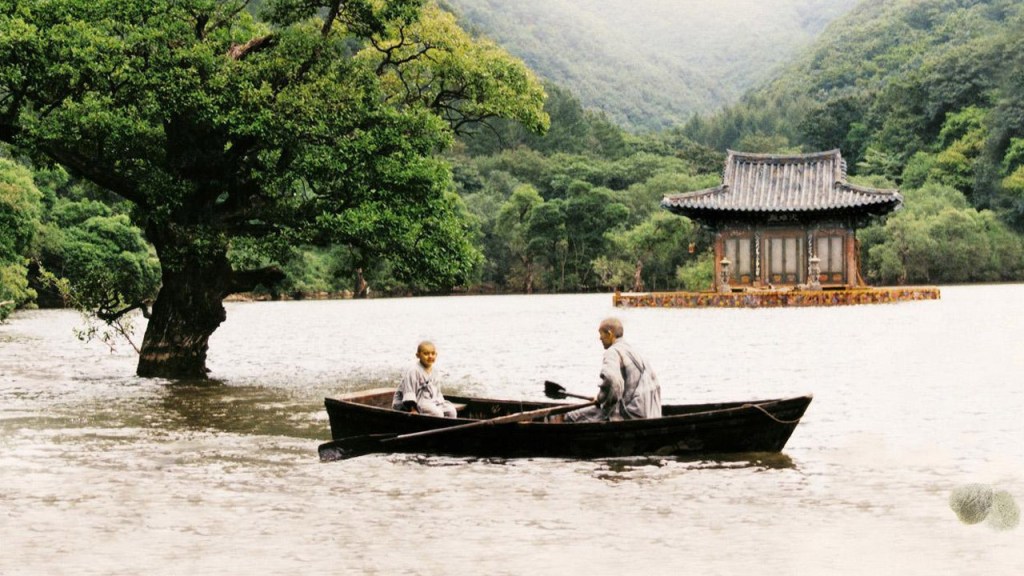
In this film, Kim ki duke the ‘cine master’ from South Korea, portrait a man who is trying in vain to calm down the overload of memories on his mobile phone, the infinite possibilities of imagination, the computer, and all Google searches. It shows us the unparalleled beauty and inviolable continuity of worldly life with supernatural craftsmanship but with the indifference of a ‘karma yogi’.
It was released in 2003, Kim’s film reflects man’s interactions on nature and nature’s instincts in a mirror, capturing the viewer with a higher sense of life and a broader worldview. The filmmaker’s background is a river that flows like a deep symbol of life surrounded by a lush green forest and the ……. of an old man in the middle of the river. The Guru is accompanied by a young disciple who begins to learn the lessons of the children by playing with the living beings around the monastery.
Waterfowl, frogs and snakes are toys in front of the boy who goes into the forest in search of curiosities. He binds those beautiful lives with a string. As punishment for the master who scrutinise the successor, he is tied with a giant stone on his back and sent back, advising him to free the mute creatures. ‘If those lives are ruined by your deeds, you will carry that burden till death’. He says.
By the time the disciple found them, the fish and the snake were already dead. The meaning of the simple life problem touches the audience like a lightning bolt when he cries with his liver split in the recognition given in the first lesson.! In the second part of the movie, spring turns into summer. The child has now grown into a teenager. Mating snakes and water sports flamingos fill him with sexual thoughts. A natural transition from nature.
He falls in love and has sex with a young woman who is undergoing psychiatric treatment at the monastery. Eventually he leaves the monastery and runs after her. Eventually he becomes a murderer and returns to the monastery.
The Guru calms him down with his magical touch, leaving him on the verge of insanity with guilt. He is soon arrested and imprisoned. The chariot of time moves again. At the height of the winter, when the river turned into an iceberg, by the time the young man returned to seek guidance after his sentence, the master had finished his work and was burning in a self-made pile. The moment when the audience’s breath stops in the course of life in the infinite flow of time! The young man, who has become a sattvik after the steps of intense experiences, wholeheartedly takes up the silent mission of the Guru.
At the end of a gloomy day, a mother leaves her uncle with her horseradish in the ashram and hides in the heart of the river, as if by some mission. This orphan boy begins to languish in the ashram with the young monk who has made ‘sanniyasa’ a way of life! A cycle is nearing completion. Frustrated with the burden of work, once again searched for his playmates as he climbed the mountain. The arrival of another spring!
This is the movie. This film, a separate chapter in Kim’s biography as a filmmaker, subtly marks the seasons in human nature. The director has grown to the highest values of humanity by abandoning his preconceived notions of violence and sexuality in this rare work. The forest and the water surface are intertwined with various living creatures such as fish, flamingos, turtles, chickens, cats, frogs, snakes and green horses. Filling problems. Beyond all techniques, the film, like any other work of art, becomes a revelation of holistic life.
The philosophical beauty of this film, which embodies the simple sweetness of a screenplay, is that each audience experiences the diverse experiences that the narrator goes through from childhood to old age as a mirror to his own life. At the end of the picture, the classic sequence of the monk climbing the mountain with the Buddha statue symbolises the human condition with all its conflicts. Each of the frames in the film is a new interpretation of the art, music and visual language of cinematography. The director cordially invites us to look at life from his own perspective.
In this sense, cinema is not a storytelling or a dramatic scene or a scene, but a vision of the artist’s life. This spring in Korean cinema is becoming a perfect example of this innovative idea.


 The Mockingbird